

The Cabin Pressure Myth: Why Ears Hurt at 30,000 Feet
Date Published
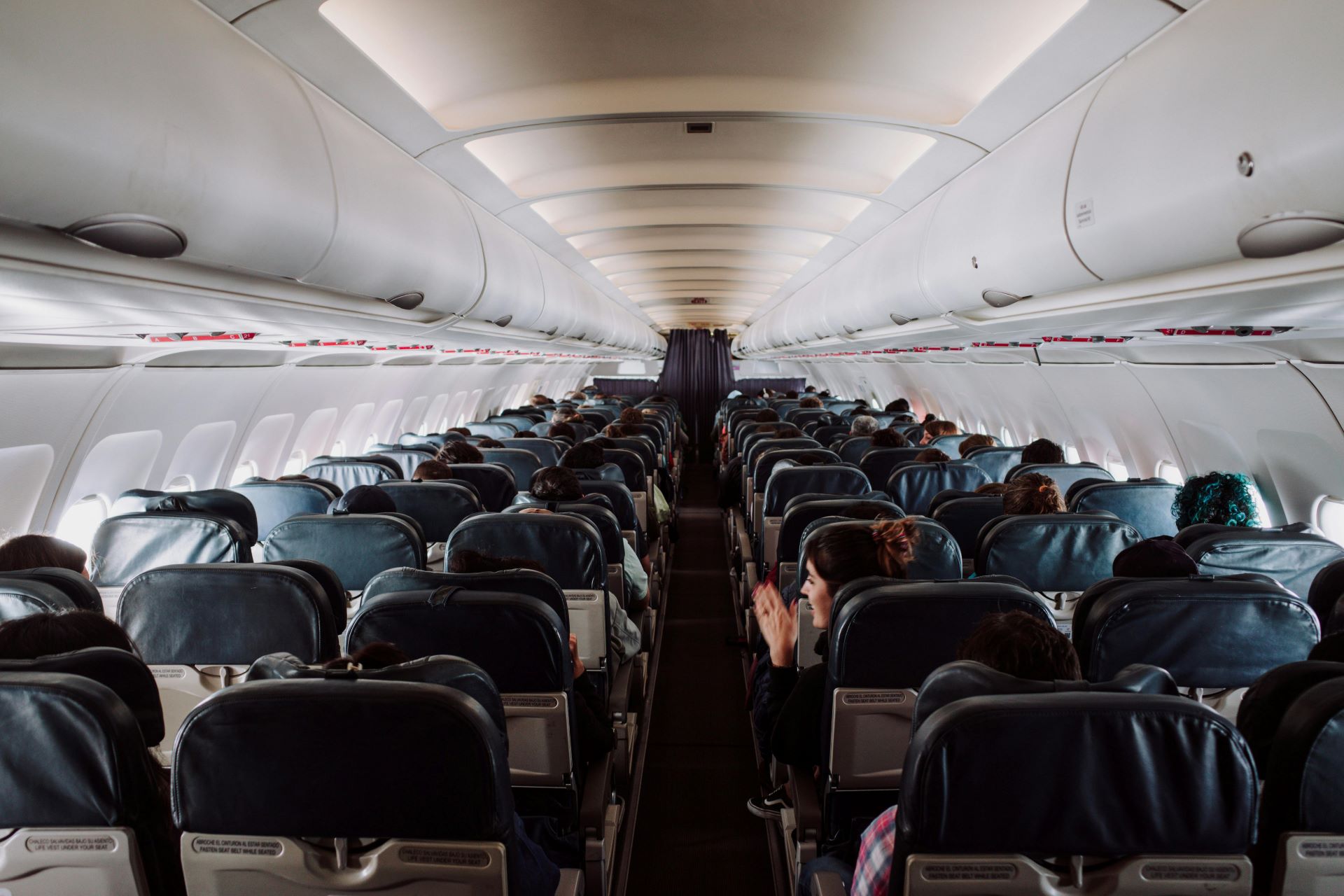
The Strange Silence Before the Pop
There’s a moment on nearly every flight when conversation fades, chewing slows, and a quiet discomfort creeps across the cabin. It begins as a faint pressure behind the eyes, then settles into the ears like an invisible weight. Soon enough, someone pinches their nose and blows, someone else yawns dramatically, and a child announces their discomfort to the entire row.
It feels unnatural because it is.
At 30,000 feet, nothing about the environment outside the aircraft is meant for human survival. The air is thin, cold enough to freeze exposed skin in minutes, and entirely incapable of sustaining life without assistance. Yet inside the cabin, passengers sip coffee, scroll through movies, and argue over armrests as if they were at sea level.
That illusion of normality is one of aviation’s greatest engineering achievements. But it comes with a small price. Your ears know the truth, even if the rest of your body is fooled.
The Myth of “High Altitude Pressure”
Many travellers believe their ears hurt simply because they are “high up.” The logic feels intuitive. Climb higher, feel more pressure, right?
In reality, the opposite is true.
Atmospheric pressure decreases as altitude increases. At cruising altitude, the air pressure outside the aircraft is far lower than what the human body is designed to handle. If the cabin were not pressurised, passengers would quickly experience hypoxia, a condition where the body is deprived of adequate oxygen. Within minutes, consciousness would fade.
So the discomfort in your ears is not caused by too much pressure, but by a carefully managed difference in pressure. The aircraft creates an artificial environment somewhere between sea level and high altitude, and your body occasionally struggles to keep up with the transitions.
The Aircraft as a Flying Pressure Vessel
Modern commercial aircraft are less like flying buses and more like carefully engineered pressure containers with wings attached. The fuselage is designed to withstand repeated cycles of pressurisation and depressurisation, expanding slightly as the cabin pressure increases and contracting as it decreases.
This process begins the moment the aircraft starts climbing.
Instead of allowing the cabin to match the outside environment, aircraft systems maintain a lower “cabin altitude,” typically equivalent to about 6,000 to 8,000 feet above sea level. This balance ensures passengers receive enough oxygen while reducing stress on the aircraft structure.
The key player in this system is the Environmental Control System, often shortened to ECS. It regulates airflow, temperature, and pressure using a combination of compressed air from the engines and sophisticated outflow valves that control how much air leaves the cabin.
Fresh air is continuously pumped in, while stale air is expelled in a carefully controlled dance. The result is a stable environment that feels breathable, even if it’s not entirely natural.
Oxygen: The Invisible Balancing Act
Air pressure alone does not determine comfort or safety. Oxygen levels play an equally critical role.
At sea level, oxygen makes up about 21 percent of the air we breathe, and the pressure ensures that enough of it enters our bloodstream. As altitude increases, the percentage remains the same, but the pressure drops, making it harder for oxygen to transfer into the body.
Aircraft compensate by maintaining a cabin pressure that allows for sufficient oxygen absorption. It is not identical to sea level, but it is close enough to keep most passengers comfortable.
This is why some travellers feel slightly fatigued or lightheaded during long flights. The body is operating in a mildly reduced oxygen environment, subtle enough to go unnoticed by many, but present nonetheless.
Cabin crew are trained to recognise the signs of oxygen deprivation, and aircraft are equipped with backup oxygen systems that deploy automatically if cabin pressure drops unexpectedly. Those masks that fall from the ceiling are not a dramatic flourish. They are a critical safety feature designed to provide immediate support.
Why Your Ears Feel the Difference
The human ear is a finely tuned pressure sensor. Inside it lies the Eustachian tube, a narrow passage that connects the middle ear to the back of the throat. Its job is to equalise pressure between the inside of the ear and the surrounding environment.
On the ground, this process happens effortlessly. The pressure inside and outside the ear remains balanced, and the Eustachian tube quietly does its work without drawing attention.
During a flight, however, the external pressure changes faster than the body can adjust. As the aircraft climbs and the cabin pressure gradually decreases, the air trapped in the middle ear expands. This usually escapes easily, often without passengers noticing.
The real trouble begins during descent.
As the aircraft prepares to land, cabin pressure increases. The air outside the ear becomes denser, while the pressure inside the middle ear remains lower. The Eustachian tube must open to allow air back in and equalise the pressure. When it struggles to do so, the result is that familiar discomfort.
That dull ache, that muffled hearing, that sudden pop. It’s not dangerous, but it is your body negotiating with physics in real time.
Descent: The True Culprit
Ask frequent flyers when their ears hurt the most, and the answer is almost always the same. Not during takeoff, but during landing.
This is because increasing pressure is harder for the body to manage than decreasing pressure. Letting air out is easy. Letting it in requires the Eustachian tube to actively open, which does not always happen smoothly.
Factors like congestion, allergies, or even mild dehydration can make this process more difficult. A blocked or inflamed Eustachian tube turns a minor inconvenience into a genuinely uncomfortable experience.
This is why seasoned travellers often chew gum, sip water, or yawn deliberately during descent. These actions help stimulate the muscles that open the Eustachian tube, allowing pressure to equalise more effectively.
The Role of Aircraft Design
Not all aircraft handle cabin pressure in exactly the same way.
Newer models, particularly those built with advanced composite materials, are capable of maintaining lower cabin altitudes. This means the pressure inside the cabin is closer to what passengers experience on the ground, reducing discomfort and fatigue.
It’s a subtle difference, but one that frequent flyers notice. Less dryness in the air, fewer headaches, and often less ear discomfort during descent.
This evolution in design reflects a broader trend in commercial aviation. Airlines are no longer focused solely on getting passengers from point A to point B. Comfort, health, and overall experience have become central to the journey.
The Illusion of Normalcy
One of the most remarkable aspects of modern air travel is how effectively it disguises the extremes of its environment.
Passengers sit in climate-controlled cabins, wrapped in a cocoon of filtered air and soft lighting, rarely considering the hostile conditions just beyond the aircraft’s thin skin. Outside, temperatures can drop below minus 50 degrees Celsius, and the air is far too thin to breathe.
Inside, a quiet system works tirelessly to maintain balance.
Pressure is adjusted gradually to avoid sudden shocks to the body. Oxygen levels are carefully managed. Air is refreshed every few minutes. All of it happens without fanfare, hidden behind panels and beneath floors.
The discomfort in your ears is one of the few reminders that this balance is not entirely seamless.
When Things Go Wrong
Although rare, issues with cabin pressurisation can occur.
Aircraft are equipped with multiple layers of redundancy to prevent and manage such situations. Sensors continuously monitor cabin pressure, and automated systems respond instantly to any irregularities.
If pressure drops too quickly, oxygen masks deploy automatically, providing passengers with a supply of breathable air. Pilots are trained to descend rapidly to a safer altitude where the outside air is dense enough to sustain life.
These scenarios are extremely uncommon, but they highlight the importance of the systems that operate quietly during every flight.
The Human Factor
Not all passengers experience ear discomfort in the same way.
Some glide through flights without noticing any changes, while others feel every shift in pressure with startling intensity. This variation is influenced by individual anatomy, health conditions, and even past experiences.
Children, for example, often struggle more with ear discomfort because their Eustachian tubes are smaller and less efficient. This is why babies cry during descent. It’s not the noise or the unfamiliar environment. It’s the pressure.
Adults with sinus infections or allergies may also find flights more uncomfortable, as inflammation can interfere with the body’s ability to equalise pressure.
Understanding these factors can help travellers prepare and manage their experience more effectively.
Simple Ways to Ease the Pressure
There’s no need for elaborate solutions when it comes to managing ear discomfort during flights. The body already has the tools it needs. It just needs a little encouragement.
Swallowing, yawning, or chewing activates the muscles that open the Eustachian tube. Staying hydrated helps keep tissues flexible and responsive. Avoiding sleep during descent ensures you can actively manage pressure changes.
For those who struggle more consistently, specialised earplugs can slow the rate of pressure change, giving the body more time to adapt.
These small adjustments can transform a flight from uncomfortable to entirely manageable.
The Science Behind the Sensation
At its core, the sensation of ear discomfort during flights is a simple matter of physics and biology intersecting.
Pressure differences create force. The eardrum, a delicate membrane, responds to these forces by stretching inward or outward. When the pressure on either side is unequal, the tension creates that familiar feeling of fullness or pain.
The body’s solution is elegant but imperfect. The Eustachian tube acts as a valve, opening when needed to restore balance. When it functions smoothly, the process is barely noticeable. When it doesn’t, the experience becomes much more pronounced.
It’s a small system with a big impact, especially in an environment where pressure is constantly being adjusted.
Commercial Aviation’s Quiet Triumph
It’s easy to focus on the discomfort of ear pressure and overlook the broader achievement it represents.
Every commercial flight is a carefully orchestrated balance of engineering, physics, and human physiology. The cabin environment is not a passive space. It is actively maintained, second by second, to keep passengers safe and comfortable.
The fact that millions of people fly every day with minimal discomfort is a testament to how well these systems work.
Your ears might protest occasionally, but they are responding to a process that is finely tuned and remarkably reliable.
A Small Reminder of a Bigger Reality
The next time your ears begin to ache during a flight, it’s worth pausing to consider what that sensation represents.
It is a signal, not of danger, but of adaptation. Your body is responding to an environment that has been carefully engineered to keep you alive in a place where survival would otherwise be impossible.
That quiet pop is a reminder that you are suspended between two worlds. One is the familiar comfort of the ground. The other is the thin, unforgiving atmosphere miles above it.
And in between, a pressurised cabin works tirelessly to make the extraordinary feel routine.

The Journey Beyond the Cabin
Commercial airline tourism is often framed around destinations, experiences, and the romance of travel. But the journey itself is an intricate part of that story.
The cabin is not just a space to endure between departure and arrival. It is a controlled ecosystem, a temporary environment designed to support human life under extraordinary conditions.
Understanding how it works adds a new dimension to the travel experience. It transforms a moment of discomfort into a point of curiosity, even appreciation.
Because behind every flight is a quiet symphony of systems, each playing its part to keep you moving safely through the sky.