

Destinations That Redefine Travel Expectations
Date Published
There comes a point when travel stops being about ticking boxes and starts becoming something far more instinctive. A quiet restlessness creeps in. Familiar skylines, predictable itineraries, and curated “must-see” lists begin to feel like echoes of experiences already lived. For many modern travellers, particularly those navigating the structured rhythms of commercial airline tourism, novelty becomes the true destination.
Air travel has made the distant immediate. What once required months of planning and weeks of transit now unfolds within hours, placing radically different worlds within reach of a single boarding pass. Yet accessibility has also flattened the experience in some ways. The same global chains, the same airport lounges, the same polished tourism circuits appear again and again. The real challenge is not reaching somewhere new, but finding somewhere that feels new.
This is where unfamiliar cultures and environments come into play. They disrupt expectations, reframe comfort zones, and transform travel into something immersive rather than observational. The following destinations are not just places to visit. They are environments that demand adjustment, curiosity, and openness, rewarding travellers with a sense of genuine discovery.
Reykjavík, Iceland: Where the Earth Feels Alive
Flying into Iceland is an experience that begins before landing. From the aircraft window, the terrain appears almost extraterrestrial. Black volcanic plains stretch toward the horizon, interrupted by glaciers and steaming fissures. It is a landscape that feels unfinished, as if the planet is still in the process of being formed.
Reykjavík serves as the gateway to this raw environment, but it is the surrounding geography that defines the experience. Geysers erupt without warning, waterfalls carve through ancient rock, and geothermal pools release clouds of steam into the cold air. For travellers accustomed to urban density or tropical climates, Iceland introduces a kind of silence that feels almost physical.
Commercial airline routes into Iceland have grown significantly in recent years, often functioning as stopover hubs between Europe and North America. This accessibility allows travellers to incorporate Iceland into longer itineraries without significant detours. Yet despite its connectivity, the country retains a sense of isolation that makes every moment feel deliberate.
Culturally, Iceland offers a subtler form of unfamiliarity. Its small population, deep literary traditions, and strong connection to nature create a rhythm of life that contrasts sharply with more industrialised societies. The novelty here is not loud or chaotic. It is quiet, elemental, and deeply grounding.
Marrakesh, Morocco: A Sensory Overload
If Iceland is defined by silence, Marrakesh is defined by intensity. Arriving by air into Morocco introduces travellers to a completely different kind of unfamiliarity, one driven by sensory immersion rather than environmental starkness.
The medina of Marrakesh operates on its own logic. Narrow alleyways twist unpredictably, markets spill into every available space, and the air carries a constant mix of spices, smoke, and sound. It is a place where navigation becomes an experience in itself, often guided less by maps and more by instinct.
Commercial flights into Marrakesh have made it increasingly accessible, particularly from European hubs. Yet the city resists simplification. It does not present itself neatly to visitors. Instead, it demands engagement. Bargaining becomes a social interaction rather than a transaction, meals stretch into long, communal rituals, and time itself seems to loosen its grip.
For travellers seeking something new, Marrakesh offers a form of controlled disorientation. It challenges expectations not through remoteness, but through density and complexity. Every street corner introduces something unexpected, making it impossible to remain passive.

Kyoto, Japan: Tradition Within Precision
Japan presents a different kind of unfamiliarity, one that lies in contrast rather than extremity. Arriving via major international airports such as Kansai or Narita, travellers enter a system defined by precision, efficiency, and order. Yet within this structure exists a cultural depth that feels entirely distinct.
Kyoto, in particular, embodies this duality. Ancient temples sit alongside modern infrastructure, and centuries-old traditions continue to shape daily life. The unfamiliarity here is subtle but persistent. Social cues, etiquette, and communication styles differ in ways that require attention and adaptation.
Commercial airline tourism has made Japan more accessible than ever, with direct routes from major global cities reducing travel time significantly. However, accessibility does not equate to familiarity. Even seasoned travellers often find Japan to be one of the most culturally distinct destinations they encounter.
The experience of Kyoto is not about dramatic landscapes or overwhelming chaos. It is about nuance. The way tea is prepared, the structure of a garden, the quiet rhythm of a shrine visit. These details accumulate, creating a sense of immersion that feels entirely new.
La Paz, Bolivia: Altitude and Perspective
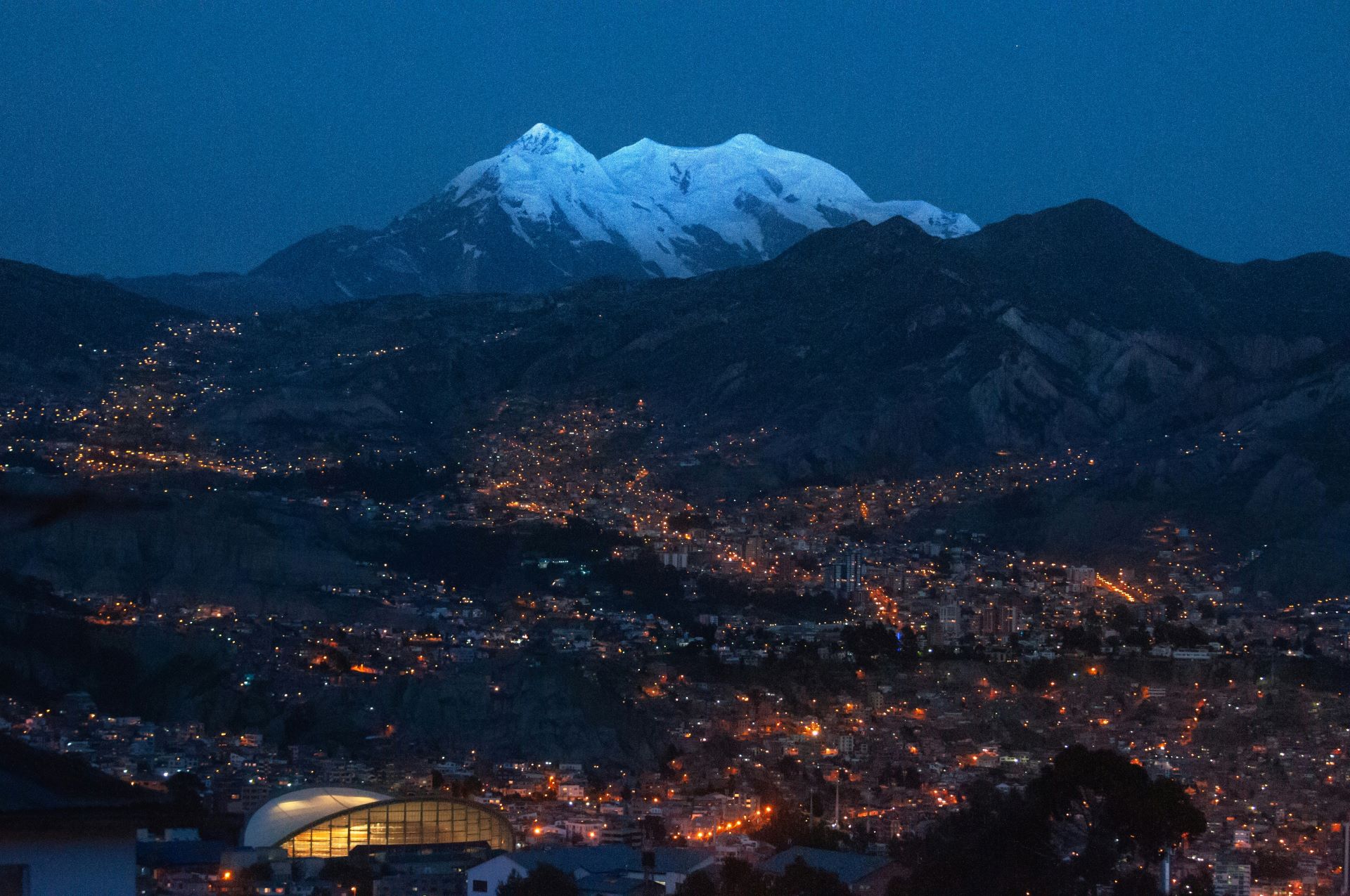
La Paz introduces travellers to a form of unfamiliarity that is both physical and cultural. Situated high in the Andes, the city exists at an altitude that immediately alters perception. Breathing becomes more deliberate, movement slows, and the body becomes acutely aware of its environment.
Flying into La Paz is itself a unique experience. The descent into the city reveals a vast urban landscape nestled within a bowl of mountains. It is visually striking and physically disorienting, setting the tone for what follows.
Bolivia remains less commercialised than many of its South American neighbours, which adds to its appeal for travellers seeking something different. The culture is deeply rooted in indigenous traditions, and this heritage is visible in everything from clothing to markets to daily rituals.
The unfamiliarity here is not just about geography. It is about perspective. Travellers are forced to adjust, both physically and mentally, creating an experience that feels immersive rather than observational.
Ulaanbaatar, Mongolia: Vastness Without Boundaries
Few destinations redefine scale quite like Mongolia. Arriving in Ulaanbaatar via international flights introduces travellers to a country where space itself becomes the defining feature.
Beyond the capital, the landscape opens into vast степpe (steppe) that stretches endlessly. There are few landmarks, few roads, and even fewer boundaries. It is an environment that challenges the structured nature of modern travel.
Commercial airline access to Mongolia has improved, but it remains relatively limited compared to more mainstream destinations. This contributes to its sense of remoteness, even as global connectivity increases.
The unfamiliarity here lies in the absence of structure. Nomadic traditions continue to shape daily life, and travellers often find themselves adapting to rhythms that are entirely different from urban environments. It is a place where time feels expansive, and the concept of distance takes on new meaning.
Queenstown, New Zealand: Nature as an Adrenaline Catalyst
Queenstown represents a different kind of newness, one driven by interaction rather than observation. Known for its dramatic landscapes and adventure tourism, it offers an environment where travellers are encouraged to engage physically with their surroundings.
Flying into Queenstown provides one of the most visually striking approaches in commercial aviation. Mountains rise sharply on either side, and the landscape unfolds in layers of water, rock, and vegetation.
New Zealand’s relative isolation has preserved much of its natural environment, creating a setting that feels both pristine and dynamic. For travellers accustomed to more urban experiences, this shift toward nature-driven activity can feel entirely new.
The unfamiliarity here is experiential. It is found in the act of stepping outside comfort zones, whether through adventure sports or simply navigating a landscape that feels larger and more immediate than expected.
Petra, Jordan: History Carved in Stone
Petra offers a form of unfamiliarity rooted in time rather than space. Arriving in Jordan via commercial flights, travellers are transported into a landscape where history is not confined to museums but embedded within the environment itself.
The approach to Petra, through a narrow canyon known as the Siq, builds anticipation gradually. When the ancient city finally reveals itself, carved directly into sandstone cliffs, the effect is striking.
Jordan’s accessibility via major airline routes has made Petra more reachable, yet the experience remains powerful. It is not simply about seeing a historical site. It is about encountering a civilisation in a way that feels immediate and tangible.
The unfamiliarity here lies in scale and preservation. The structures are both monumental and intricate, creating a sense of connection to a past that feels surprisingly present.
The Role of Commercial Aviation in Redefining Travel
What connects these destinations is not just their uniqueness, but their accessibility. Commercial aviation has transformed the concept of distance, making even the most remote locations reachable within a structured travel framework.
Airlines act as gateways rather than endpoints. They bridge the gap between familiarity and discovery, allowing travellers to move seamlessly between vastly different environments. Yet this convenience also places greater responsibility on travellers to seek out experiences that go beyond the predictable.
Choosing destinations that offer genuine unfamiliarity requires intention. It involves looking past popular itineraries and considering what kind of experience is truly desired. Whether it is environmental contrast, cultural immersion, or historical depth, the possibilities are extensive.

Redefining What It Means to Travel
Ultimately, the desire for something new is not just about location. It is about perspective. The destinations explored here offer more than visual variety. They challenge assumptions, disrupt routines, and encourage a deeper level of engagement.
Commercial airline tourism has made the world more accessible, but it has not diminished its diversity. The unfamiliar still exists, waiting just beyond the edges of conventional travel patterns.
For those willing to seek it out, the reward is not just a new destination, but a new way of experiencing the world.